Ch. 04 Settling In
Your First Week Home: Anchor the Day to Naps
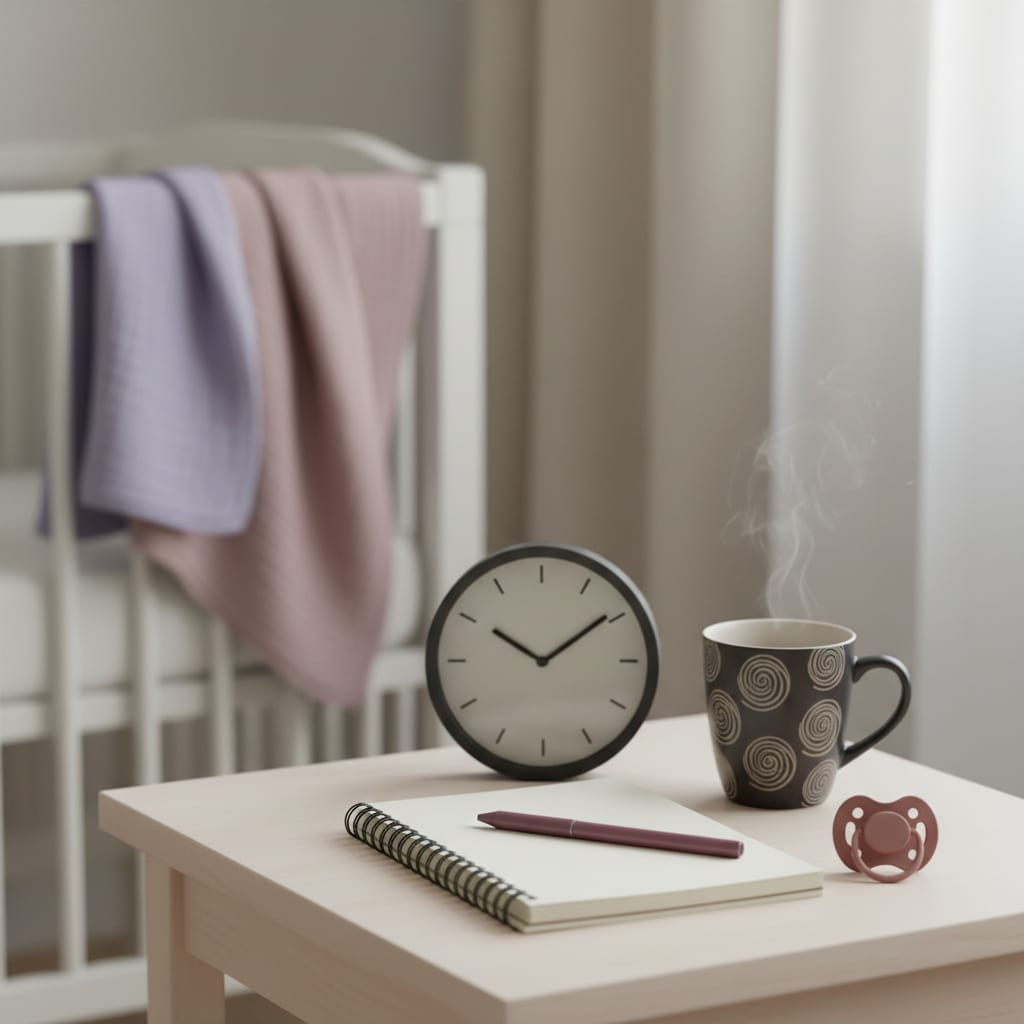
The best thing you can do in your first week as a stay-at-home mom is anchor the day to naps. Don’t build a schedule, don’t organize the garage, don’t try to justify the leap with productivity — just learn when your child actually sleeps and let that window become the day’s one fixed point. Everything before the nap is one block, everything after is another, and the nap itself is yours. A week spent learning that structure beats a week spent performing busyness, because the nap anchor is what every good stay-at-home day gets built on for the next several years. Here’s the week, day by day.
Why naps, of all things
Because they’re the only structure that’s really there. In your office life, the day came pre-shaped: meetings, deadlines, lunch. At home with a small child, there is exactly one recurring, non-negotiable event — sleep. Fight it and every day is improvisation from wake-up to bedtime. Anchor to it and you get, immediately: a morning block with a known endpoint, an afternoon block with a known start, and a guaranteed stretch in the middle that belongs to you.
I learned this the stupid way. My first week home, I treated naps as free-time lotteries and scheduled my days like a marketing calendar. By Thursday I’d had a big plan collapse four days running because the nap “came at a weird time.” The nap wasn’t weird. My plan was. The day I flipped it — nap window first, everything else arranged around it — was the day this job started feeling doable.
Monday–Tuesday: observe, write down, do nothing clever
Your only assignment for the first two days: notes. When did she wake? When did she get fussy? When did sleep actually come, and for how long? No adjusting yet, no “we’re on a schedule now, sweetheart” — just data. Daycare’s nap schedule, if you’re coming off one, is a starting hypothesis, not a fact; home sleep often lands differently.
Keep the rest of the day embarrassingly simple. One walk. Easy meals. You just changed your whole life; the standard for a good day this week is “everyone fed, nobody crying at the same time as anyone else.”
Wednesday–Thursday: find the window, protect it once
By midweek a shape usually emerges — sleep pressure building at a similar point each day, give or take. That’s your nap window. Now protect it, once per day: plan Thursday morning so you’re home before the window opens, wind down the same way (lunch, books, bed — same order), and see what happens when the nap gets a fair chance instead of a car-seat cameo.
If a window refuses to emerge — naps scattered anywhere across three hours, some days skipped entirely — that’s not a you-problem or a broken-kid problem; it’s usually wake windows misaligned with their age. This is exactly the problem Betteroo was built for: it’s a personalized baby-and-toddler sleep app that takes your child’s age and sleep history and hands you the day’s actual nap windows and bedtime, adjusting as they grow. For a brand-new SAHM the point isn’t sleep-nerd perfection — it’s that it turns “when will the nap happen?” from your day’s biggest unknown into a plan you can build the rest of the week on. It runs around $20 a month, and it’s a tool, not a spell: your kid will still have opinions. What it removes is the daily guessing, which in week one is worth a lot.

Friday: claim the nap block for yourself
The first four days established where the nap lives. Friday’s job is establishing what it’s for: you. Not chores — you. Pick one thing before the nap starts (rest, a book, a shower with the door closed, staring at the yard) and do that thing. This sounds trivial. It is load-bearing. The habit you set in week one — nap block as your hour versus nap block as unpaid catch-up shift — tends to calcify fast, and the moms who burn out hardest are usually the ones who gave the hour away from the start.
The weekend: zoom out, don’t schedule
Resist the Sunday-night urge to turn your week of notes into a laminated timetable. You have exactly what week one was supposed to produce: a known nap window, one protected wind-down routine, and a claimed hour. That’s the foundation. The next twelve weeks build on it gradually — morning anchors, afternoon resets, actual rhythm — and the whole arc is mapped in your first 90 days as a SAHM.
And be gentle about the feelings that showed up midweek — the “what have I done” flicker on Wednesday, the missing-your-office pang. Week one is a career change and an identity earthquake in the same seven days; the identity shift gets its own guide because it deserves one. The job itself — what the days are actually made of once they have bones — is covered in how to be a stay-at-home mom when you just became one.
FAQ: the first week at home
What should a new stay-at-home mom do the first week?
Observe more than you organize: track your child’s real sleep pattern, protect one nap properly by midweek, claim the nap hour for yourself by Friday, and keep everything else deliberately minimal. Structure comes later, on top of the nap data.
Should I keep my child on the daycare nap schedule?
Treat it as a hypothesis. Home is a different sleep environment — quieter, familiar, no toddler herd effect — so observe for a few days before enforcing anything. Many kids drift to a slightly different window at home; anchor to the one that actually shows up.
What if my child fights every nap?
First rule out timing: nap battles are very often wake windows that are too short or too long for their age. Tighten the wind-down (same order, every time) and check the windows against their age — that adjustment, which a personalized plan like Betteroo’s automates, resolves a surprising share of “won’t nap” within a week or two.
Is it normal to feel lost the first week home?
Completely. You traded a structured, adult-filled, externally validated day for an unstructured one overnight — feeling unmoored is the reasonable response. The fix isn’t busyness; it’s the small structure (nap anchor, daily walk, one claimed hour) this week is quietly building.