Ch. 04 Settling In
10 Month Sleep Regression: Standing, Separation and Naps
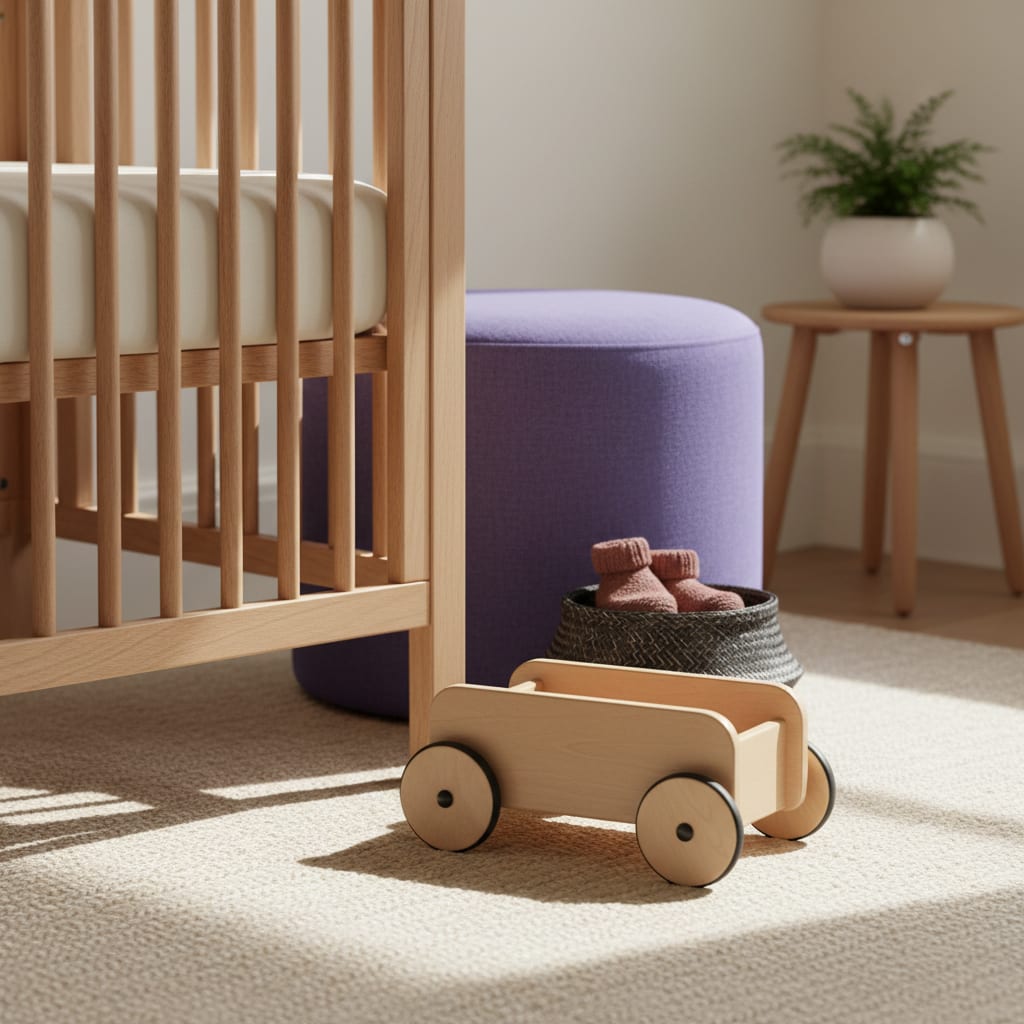
The 10 month sleep regression is usually three ordinary things arriving together. Your baby has learned to pull up to stand but may not know how to get back down. Separation anxiety is building toward the stretch where the AAP says it usually peaks. And the second nap starts getting refused. None of it means sleep is broken. Treat it as three separate problems: teach the way down in daylight, practise short goodbyes during the day, and keep two naps even when one is fought. Most families find the nights settle once each strand has had its turn.
What is actually going on at ten months
Standing. HealthyChildren’s guide to movement between 8 and 12 months says babies pull themselves up “every chance she gets”, and that at first a baby “may not know how to get down”. That is the baby standing at the crib rail at 2 a.m. and crying, who isn’t upset about anything except being stuck upright. The CDC lists “pulls up to stand” and “walks, holding on to furniture” among its milestones by 1 year, so at ten months plenty of babies are partway there and practising hard.
Separation. The AAP’s page on emotional development from 8 to 12 months says separation anxiety “usually peaks between ten and eighteen months”. It describes the bedtime version exactly: a baby who will “refuse to leave you to go to sleep, and then she may wake up searching for you in the middle of the night.” The NHS adds that this is “a sign your baby now realises they’re a separate person from you.”
The nap. Betteroo puts the usual awake stretch for a ten-month-old on two naps at about 3 to 3.75 hours. It notes that a baby protesting the second nap at this age is almost always on a short strike, not ready to drop it. The move to one nap typically comes much later, somewhere around 15 to 18 months.
How this differs from eight months
If you lived through the patch covered in our 8 month sleep regression plan, that plan still holds: keep the routine, split the nights, lower the bar. Ten months adds two things eight months mostly didn’t have. The new skill is vertical rather than crawling, so it needs a way down as well as practice. And the separation response is usually stronger, with more of it aimed at bedtime itself. The fixes below cover only those two, plus the nap.
Why ten months lands on the parent who is newly home
By ten months, the at-home parent has usually become the default one: every feed, every nap and most bedtimes. That makes you the person this baby protests losing. The AAP page notes that a baby with a strong attachment may show separation anxiety earlier than others. Being the one your baby wants at 9 p.m. tells you the bond is working. It is still exhausting.
The nap strike lands on the at-home parent too. A one-nap day looks easier from where you’re standing: one block for errands, one window for a shower, no second nap to protect around the afternoon. That is the moment the temptation to drop a nap is strongest, and it is usually too early.
The plan, one strand at a time
Take the strands in this order, and give each a few days before judging it.
1. Standing: make the crib safe, then teach the way down
Lower the mattress first. HealthyChildren’s room-safety guidance says to set it “at its lowest position before your child learns to stand”, so if yours is still on a higher setting, change that today. Then teach the way down during the day. The AAP’s movement page suggests physically showing a baby how to bend the knees and lower herself, which “may save you many trips to her room.” Several short rounds at the sofa or a low table each day work better than one long session.
At night, help your baby down once, calmly, and lay them on their back. The AAP’s safe sleep page says babies who roll comfortably both ways don’t need to be turned back, as long as the bed stays bare: no blankets, pillows, stuffed toys or bumpers. If cold nights are the worry, it suggests layers or a wearable blanket, such as a cotton HALO SleepSack in the 6-12 month size, rather than a loose blanket.
2. Separation: practise in daylight, keep bedtime short
The AAP’s own suggestion is short practice sessions at home. When your baby crawls into another baby-proofed room, wait a minute or two before following. When you step out, say where you’re going and call out instead of rushing back. The NHS adds peekaboo and letting a mobile baby follow you where it is safe. Both teach the same lesson: you go, and you come back.
At bedtime the same idea applies. Use one short, identical goodbye, then leave. The NHS advises smiling and waving goodbye confidently, because a baby picks up on tension. Its suggestion of leaving something that smells of you is for daytime care with someone else. In the crib, the AAP’s bare-bed rule still applies until age one.
This is also a good month for your partner to take some bedtimes. If your baby only accepts you, short handovers on calm nights spread the load before it all falls to you. If the waking turns into getting up to check you are still there, that is its own pattern, covered in waking to check you’re still home.
3. The wobbling nap: hold two naps
When the second nap is refused, offer it anyway for a week or two. Betteroo’s suggestion is to stretch the first awake window slightly and move bedtime a little earlier while it resets. If the first nap has also started creeping earlier each morning, sort that first. It can push the whole day out of shape, as first nap too early explains. A refused nap is still quiet time in the crib, and your afternoon still has a break in it.
When it is not the regression
Call your pediatrician if the sleep change comes with a fever, poor feeding, or a baby who is much harder to comfort than usual. The same goes if you have concerns about how your baby is moving. HealthyChildren says to let your pediatrician know if a baby is not sitting alone by nine months. The NHS suggests getting help if separation distress is severe, lasts a long time after you have left, or has gone on for more than a few weeks. You don’t need proof that something is wrong to ask.

FAQ: the 10 month sleep regression
Is the 10 month sleep regression real?
Many families notice a rough patch around ten months. It is not a formal stage, and some babies barely wobble. The drivers behind it, standing and separation anxiety, are real and well documented.
How long does it last?
There is no single timeline. A stuck-standing phase often eases once your baby can get down alone. The AAP describes separation anxiety as peaking between ten and eighteen months and fading in the second half of the second year, though its effect on sleep usually calms well before then.
Should my 10 month old drop to one nap?
Probably not yet. Two naps are typical at this age, and a refused second nap is usually a temporary strike. Holding the two-nap schedule for a week or two usually brings it back.
My baby stands in the crib and cries. Should I keep laying them down?
Help them down once, calmly, then keep it boring. The real fix happens in daytime practice, once they can lower themselves alone.
Can I give my baby a comfort toy for separation anxiety at night?
The AAP’s safe sleep advice keeps toys and soft objects out of the crib until age one. Use daytime practice and a short, consistent goodbye instead, and revisit a comfort object after the first birthday.