Ch. 04 Settling In
Nap Training When Nights Are Fine but Days Are Chaos
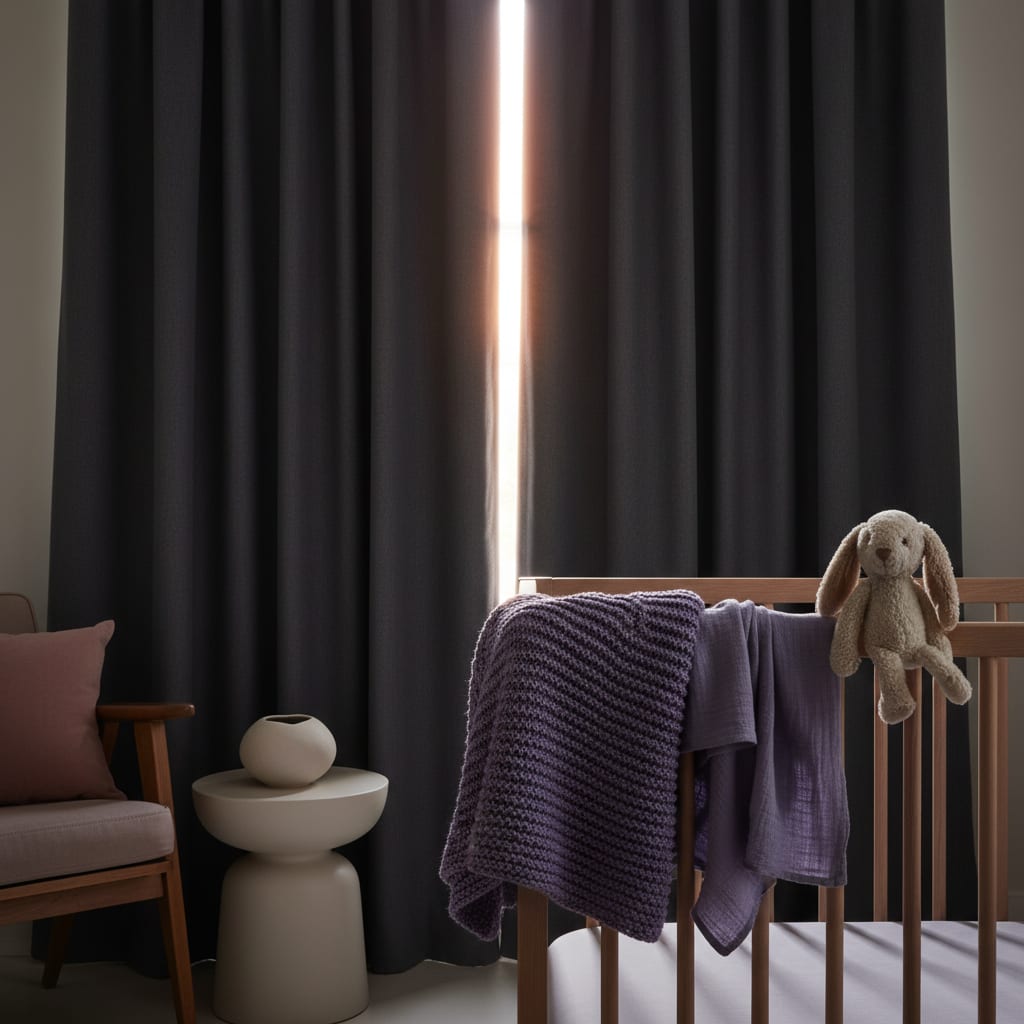
If your baby sleeps a long, solid night and then falls apart every afternoon, nothing has gone backwards. Night sleep and day sleep run on different machinery: nights have the body clock pushing the same way all evening, while naps depend almost entirely on getting the awake time before them roughly right, against a much weaker daytime signal. Good nights genuinely don’t produce good naps. Naps are their own project — separate start date, separate protocol, about two weeks of holding one thing still.
Why good nights don’t produce good naps
Bedtime has help. By early evening the body’s own timing signals and a full day of accumulated sleep pressure both point the same way, and a baby who’s ready drops into a long consolidated block. Nothing mid-day works like that. The daytime signal is weaker, the room is brighter, the house is louder, and the window depends on the awake time before it — too little and there isn’t enough pressure to get through the first sleep cycle, too much and you’re putting down a baby who’s over-tired and wired.
Which is why “she sleeps eleven hours, why can’t she nap for forty minutes” is such a common question, and why the answer is almost never you’ve done something wrong at bedtime. Different problem, different levers.
The reason this lands hardest on a new SAHM
Because you just rebuilt your entire working day on top of naps — the whole premise of anchoring your first week home to the nap. It’s the one fixed point a day with small children has, and everything you’d like to do (eat sitting down, make a phone call, think a full thought) is stacked on it.
Nights were never your operational problem; nights were your recovery. And if your child was in daycare, someone else owned naps entirely, in a room built for it, with three other babies doing the same thing at once. Now you own naps, in a bedroom you have never run a nap in, with the mail arriving and a toddler needing lunch. The chaos is real — and it’s a specific solvable problem, not a verdict on you.
Run naps as their own project, with a start date
The useful reframe: stop treating naps as something that happens to your day, and treat them as a fortnight-long project with an end date.
Pick a two-week window with nothing in it — no travel, no visitors staying, no vaccinations, ideally no teeth you know are coming. Change one variable at a time, hold it three or four days, and keep a plain note on your phone of what you changed and what the nap did. Chasing a different fix every afternoon is why two weeks of effort so often produces no information at all.
Betteroo’s step-by-step walkthrough of nap training goes deeper into the method than a transition guide should; this page is about running it around a day you’re newly in charge of.
The variables, in the order worth touching
1. The wake window. Timing first, always: it’s free, it’s the most likely cause by a wide margin, and every other variable is downstream of it. Shift the awake time before the nap by fifteen minutes, hold three or four days, watch. The window that was right at four months is wrong at seven, which is why a schedule borrowed from a friend rarely survives a fortnight.
2. The room. Dark and steadily loud for the whole nap, not the first ten minutes. The moment that matters is forty minutes in, when a baby surfaces between cycles and light or a sudden noise decides whether they resettle or get up for the day. A continuous mechanical hum beats a track that loops or shuts off; the Yogasleep Dohm Classic is the fan-based original and does that one job. Sleepout makes suction-cup blackout panels for a window you can’t otherwise cover.
3. How the nap starts. Same short sequence every time — three or four minutes, same order, ending in the same place — so the cues do the work rather than your arms. If sleep currently begins on a feed or in motion, that’s not a failure and needn’t change first; just know it’s the variable most likely to explain a baby who wakes and calls for you.
4. The response plan. Decide in the morning what you’ll do at 1:47pm, because 1:47pm is a terrible time to make a philosophical decision about sleep. Pick an approach, note how long you’ll give it, hold it for the fortnight. Consistency beats a better plan applied differently on Tuesday.
What two weeks of this does to your day
It will cost you something. Plan for that rather than be ambushed by it.
- Protect one nap completely. Usually the first, at home, in the dark room, nothing scheduled. Run errands and playgroups around the other one.
- Expect the first three days to be worse. Not evidence the plan is wrong; evidence you changed something.
- Keep a fallback nap that doesn’t count as failure. A contact nap, the carrier or a stroller walk gets sleep into a day that’s gone sideways, and the project survives it.
- Front-load the day. Assume the afternoon nap is the fragile one, and put anything needing a functioning adult before lunch.
Being wrecked by all this has a real cost worth naming rather than absorbing — the cost of sleep deprivation for a one-income family puts numbers around it.
When to stop, or pause
Pause for illness, a genuine regression, teeth, a move or a new sibling. Nothing built during those weeks holds, and pushing through mostly costs you confidence in the method.
Re-frame if naps are short but total daily sleep is fine and your baby is content — some babies are simply short nappers, and the forty-five-minute nap ceiling explains why that’s a scheduling problem, not a sleep problem. Stop too if your child is nearing three and the nap is on its way out: that’s a quiet-time question, not a nap-training one.
And if two weeks of real consistency changes nothing, the likely explanation isn’t your resolve — it’s that the timing was never right to begin with. Wake windows move with age, and reverse-engineering them on four hours of sleep is a rough job. That’s what a sleep plan calculated for your child’s exact age is for: it hands you the day’s windows, nap targets and bedtime and adjusts them as your child grows, so the fortnight tests one informed hypothesis instead of five guesses. It runs around $20 a month and won’t lengthen a nap by itself — no app can. What it removes is the guessing, which in the first months home is most of the mental load.

Whatever the fortnight produces, keep the timeline in view: nap chaos is among the more reliably temporary problems of the first year, and how much structure to expect at each stage is mapped in your first 90 days as a SAHM.
FAQ: nap training when nights are fine
Why does my baby sleep well at night but not nap?
Because day and night sleep are driven differently. Nights get the body clock and a full day of sleep pressure working together; naps depend on the awake window before them being roughly right, against a weaker daytime drive.
Do I have to nap train if night sleep is already good?
No. Nap training is worth doing when short or chaotic naps are wrecking your day, not because a schedule says so. If your child seems rested and the day is workable, leaving it alone is entirely reasonable.
How long does nap training take?
Plan for about two weeks of consistency, with the first two or three days often worse than baseline. If a fortnight of unchanged conditions produces nothing, the problem is usually timing rather than method.
Can you nap train without letting the baby cry?
Yes. Timing, a dark and steadily loud room and a consistent pre-nap sequence are the biggest levers and involve no crying. Beyond that families choose different response plans; what matters is picking one and running it the same way each day.
Should I nap train and sleep train at the same time?
Generally not. If nights are already fine there’s nothing to fix there, and changing two things at once makes it impossible to tell which worked. Take naps as their own project, on their own fortnight.